


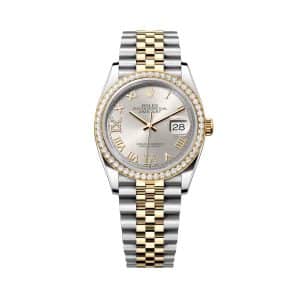

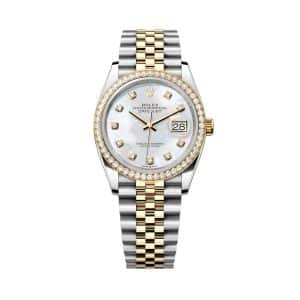
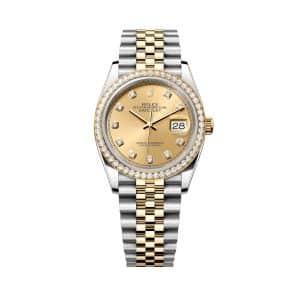
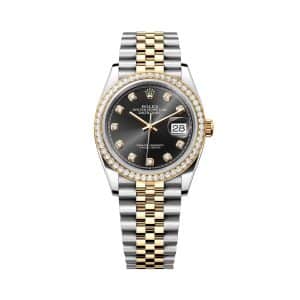

The Classic Precious Metal
Yellow gold is the most traditional precious metal in watchmaking, and Rolex has been casting its own 18k yellow gold alloy since the 1950s. The brand operates an in-house foundry — one of the only watchmakers that does so — which allows complete control over the gold composition, the casting process, and the consistency of color across the case, bracelet, crown, and dial appliqués. A Rolex yellow gold watch is a uniform gold watch: every component is cast from the same alloy batch, every surface holds the same tone under any light, and every polished or brushed finish catches light the same way. On the Day-Date — the reference most closely associated with yellow gold since its 1956 introduction — this attention to alloy consistency is what distinguishes a Rolex President from gold watches at every other price point.
Yellow Gold vs. Two-Tone: When to Choose Each
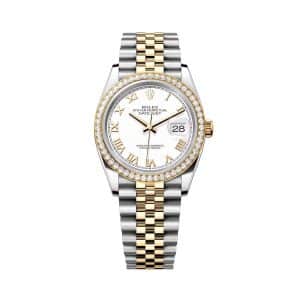
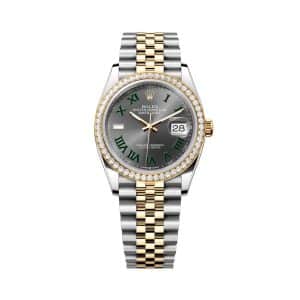
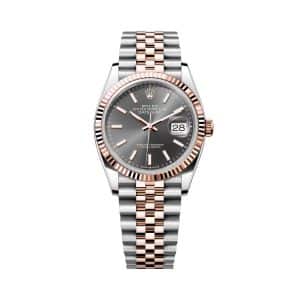
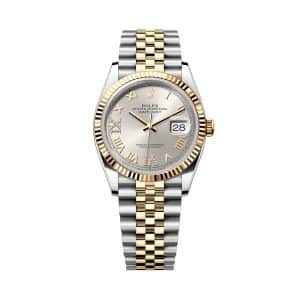
Yellow gold (full 18k gold case and bracelet) and two-tone (steel case and bracelet center links with yellow gold bezel, crown, and bracelet outer links) are two very different propositions. Full yellow gold is the statement configuration — the watch reads as luxury from every angle, the weight (120–160 grams depending on reference) is substantial, and the value retention on models like the Day-Date is exceptional because precious metal content provides a price floor. Two-tone (also called "Rolesor" in Rolex terminology) is the compromise — it delivers the warm gold aesthetic at roughly 40% of the full-gold price, with lower weight and more casual wearability. On the Datejust, two-tone is one of the most popular configurations in the entire catalog; on the Day-Date, full yellow gold is the signature configuration.
Pre-Owned Pricing Guide
| Reference | Model | Configuration | Pre-Owned Range |
|---|---|---|---|
| 228238 | Day-Date 40 | Yellow Gold | $32,000 – $42,000 |
| 128238 | Day-Date 36 | Yellow Gold | $28,000 – $36,000 |
| 126238 | Datejust 36 | Yellow Gold | $22,000 – $28,000 |
| 126338 | Datejust 41 | Yellow Gold | $24,000 – $30,000 |
| 116508 | Daytona | Yellow Gold | $45,000 – $55,000 |
Frequently Asked Questions
Q: Is yellow gold Rolex investment-grade?
A: Precious metal Rolex references hold value better than steel references over multi-decade periods because the gold content provides a floor value. A Day-Date in yellow gold will never be worth less than its scrap gold value, which currently represents roughly 35–45% of its secondary market price. Steel references have no such floor — their value is entirely brand-driven. For a detailed analysis of how precious metal watches perform as part of a collection strategy, see our luxury watch investment guide.
Q: Does yellow gold scratch more than steel?
A: 18k gold is softer than 904L steel, so it does scratch more easily in daily wear. However, gold polishes back more readily than steel — a professional polish ($200–$400) can restore most scratches on a gold case and bracelet. Most gold Rolex owners plan for a service/polish every 3–5 years to maintain the finish.
Sell or Trade Your Yellow Gold Rolex
From a vintage Day-Date 18038 to a modern Daytona 116508, our Diamond District specialists evaluate every yellow gold reference with precision. We factor in precious metal content, bracelet condition, and movement service history to deliver the highest offer in the NYC market. Walk in for an immediate cash appraisal or ship via our fully insured Parcel Pro label.
Visit Us in the Diamond District
Our showroom: 20 W 47th St., Suite 401, New York, NY 10036. Walk-ins welcome.
Hours: Mon–Fri 9 AM – 6 PM | Sat–Sun Closed | Phone: +1 (646) 429-9412
Looking to Sell Your Rolex?
Don't settle for less. We pay the absolute highest market value for your Rolex, with immediate same-day funding.
GET A CASH OFFER IN MINUTES
WhatsApp: +1 (646) 429-9412